

Hi all,
I've recently tried my hand at commanding, and found that radio etiquette amongst some squad leaders is lacking. As someone who works in a public service whose coordination via the radio is pivotal, I hope that my experience with radio etiquette and discipline will be of use to some of you.
In my eyes, communication is the Commander's primary purpose, and for that reason, I think using the correct radio etiquette, and maintaining radio discipline is key to the successful coordination of a team.
Please note that the below advice is also applicable when talking Squad-to-Squad, and that this advice is as much for Commanders as it is for squad leaders.
Identify Yourself
When speaking to the Commander (or another SL), you should first of all make it clear who you are talking to, and who is talking e.g:
"Commander, this is Squad One." / "Squad One, this is Command."
This is because even though your squad number is present on the Mumble overlay, the Commander is often monitoring the map or his UAV, rather than the overlay location. Too often I have squads try and talk to me without identifying themselves, and I have no idea who to talk back to.
Wait for the 'Go ahead'
After identifying who you are and who you are speaking to, you should then wait until you receive a response before talking further, e.g:
"Squad One - Go ahead."
The Commander may already be in the middle of talking or listening to another squad, or be focusing on a critical task, and may not be ready to hear what you have to say. Talking over another squad ensures that no one's voice gets heard, and more time on the radio is wasted with requests to repeat what was just said. If practical, the Commander should let you know he's not available by saying:
"Squad One - Standby."
Once the Commander is clear to talk, he should re-contact the squad he told to standby. If more than a few seconds have passed since telling a squad to standby, the Commander should check that the squad is ready to talk following the same steps above - the squad could now be in a fire fight, or be talking to another squad leader since they last tried to talk to the Commander and not be ready to talk with him. Communication works both ways.
The above two points are critical above all else for ensuring that any communications are heard and understood clearly.
Stay Off 'Squad-to-ALL-Squads' (NUM *) when a Commander is on duty
Squad-to-ALL-Squads is acceptable if there's no Commander present, but when there is, he should be the go-between for squad requests (such as ammo, transport, fire support). There are a few squad leaders out there who take it upon themselves to hog the airwaves for their every single wish and whim. These tend to be the less experienced players, and their requests are vague and not targeted at anyone in particular.
When a Commander is on duty, he has a UAV and can survey the battlefield much better than you can. If requests are made through the appropriate channels, he can identify the squads best placed to fulfil the request, and also advise a squad when their request is not possible or folly.
Above all else, it hogs the radio, undermines the Commander's role, and annoys the squads to which your request is irrelevant.
Direct Squad-to-Squad communication between nearby squads working together is ideal, and doesn't require the Commander to act as a go between; but neither does it need the other 7 squads on the map to hear what you have to say either.
Commanders to use 'Commander-to-ALL-Squads' (NUM *) sparingly
To prevent the Commander's voice just being another noise that squad leaders block out, the Commander should only use their 'To-ALL-Squads' when it is necessary to do so. This depends on the situation, but here are some examples I can think of:
- Congratulating the team on their efforts on capturing a flag / destroying a cache.
- To inform a number of squads that you've asked to wait in position to 'GO'/converge on the target simultaneously.
- To remind all infantry squad leaders to ensure that they have medics and breachers. (Recently played INS with a very good and responsive team, only to often find they fight their way into a cache/hideout and don't have C4 to hand)
- To advise all squads to be less liberal with the 'Give Up' button and await for medics, in particular when tickets are running low and victory could possibly be snatched from the enemy.
- To direct all squads away from a particular objective where loss of life is certain, and there is nothing to be achieved by continually charging at it.
- To warn squads of an IMMEDIATE threat to life and limb, such as Gary approaching.
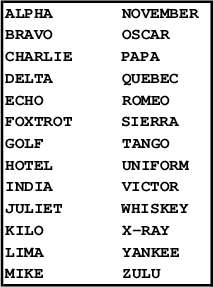
Learn the phonetic alphabet
This is covered in the manual. It's not about pretending to be in the army, it's simply about clarity. The phonetic alphabet exists to ensure that signature letters are not ambiguous.
The PR community is diverse, especially in Europe where we regularly hear a whole host of weird and wonderful accents. 'G' and 'J' often get mixed up, but there's no ambiguity between 'GOLF' and 'JULIET'.
People's budget microphones can also cause a problem. When your microphone is crackling and popping away like a bowl of Rice Crispies, "Gary in B6!!" becomes B6? C6? D6? E6? G6? Boom.
TL;DR
- Capture your audience and identify Yourself
- Wait for the 'Go Ahead' before talking
- Pass non-urgent requests to other squads THROUGH the Commander
- Speak directly to the squad you want to talk to, not everyone
- Use 'To-ALL-Squads' as little as possible / never if a Commander is on duty
- Use phonetics
PS. As a side note, if I'm your Commander in game, please give me feedback so I can improve.


