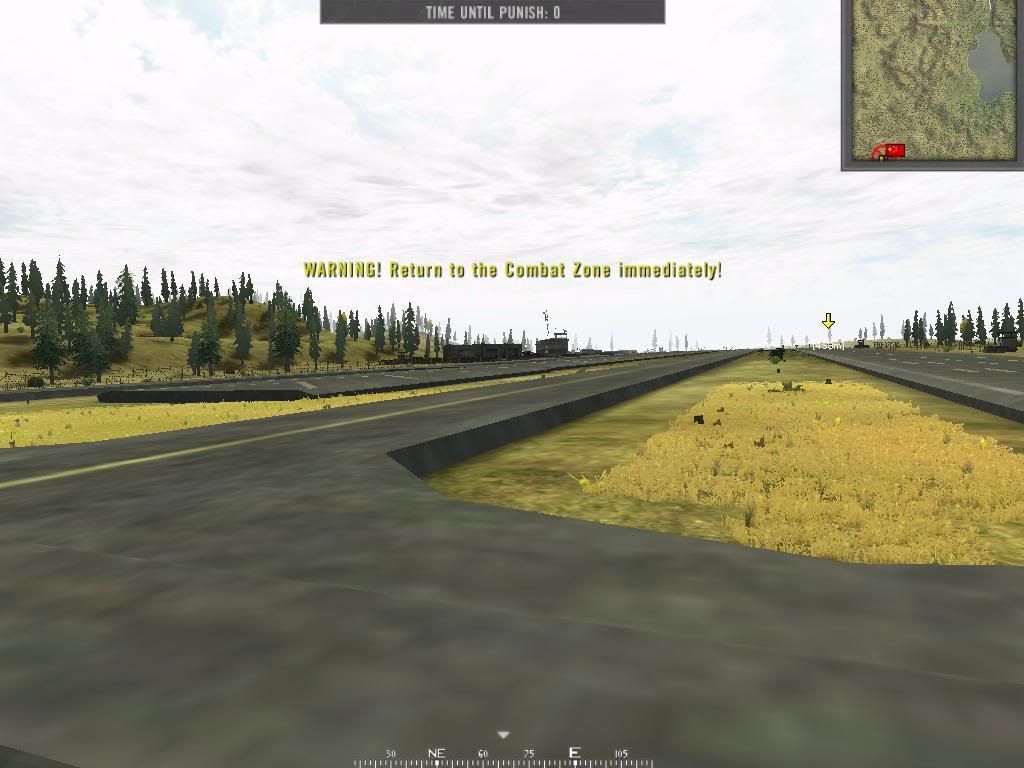
PR Aerospace Improvement: Airports and Runways for Jet Aircraft

Suggestions from our community members for PR:BF2. Read the stickies before posting.
CAS_117
Posts: 1600
Joined: 2007-03-26 18:01

Re: PR Aerospace Improvement: Airports and Runways for Jet Aircraft

Post by CAS_117 »

*Edit: If you don't like words, just look at the picture instead.

This is where the term "easier said than done" really becomes apparent. People like suggesting things, but have no idea what is actually involved in the process. Its pretty funny when people spend so much time typing instead of actually just going and DOING what they think is such a good idea. What do you think I did? Who knows? Maybe someone will agree with you.

Go download 0.6 when you couldn't even taxi up the raised runways cause some tool didn't give them a low enough differential. Or the 0.6 betas where the aircraft couldn't taxi and were placed perpendicular to the runway. Good times :lol: . I'm sure you all remember how often Kashan 64 was played when the AA missiles had something like a 0.01 hit rate? The F-16/MiG-29 imbalance made the J-10/EFT look like the entire flying trapeze team of Cirque du Soleil on a Gyroscope. Yeah ok you've got it so rough. I understand. :roll:

And Warren, if you are so certain that your idea is so good and easy, go start the BF2 editor and tell me how long it takes you to extend the runways on Qinling. If you take longer than the time it takes for me to edit 2 numbers in a tweak file, then you have to start making your posts readable.

Most of you I am sure haven't started the BF2 editor or opened a tweak file for more than like a few minutes. Yes even aircraft engines operate on the same principle as a car engine (Engines have nothing to do with air. Engines keep pushing even though at beyond 5000m there is nothing to push against. Your wings do depend on air however. Hence control loss and stalling.) A lot harder to make aircraft realistic when it works closer to your Sister's Honda isn't it?

The only way to have a realistic jet engine is to make a rotating wing with lift components that spin, but that is a ways off as far as I am concerned, (cause then we get into some actually complex stuff which even I have trouble fully grasping.

Now I am explaining a fairly simple concept, and I am sure I can do it in fewer words than most people.

(Dumb people can skip)

This is what an airplane engine looks like in BF2.

Engines have a certain amount of RPMs ok?

ObjectTemplate.setMinRotation 0/0/0 <- min RPMs. (Used to have a negative value. This is why you would reverse in 0.6 when you left your throttle down by accident)
ObjectTemplate.setMaxRotation 0/0/5000 <- Max RPMs.
ObjectTemplate.setMaxSpeed 0/0/25 -> 0/0/65 <- speed that engine goes from "0" to "x" RPMs ie) adding 25 RPMs, per second. (Or rotations per second)
ObjectTemplate.setAcceleration 0/0/15 -> 0/0/75 <- how fast the engine reaches max speed (rotations per second squared)
ObjectTemplate.setInputToRoll PIThrottle <- usually the "W" and "S" key
ObjectTemplate.setAutomaticReset 1 <- This doesn't behave how I expect. Kindof weird.
ObjectTemplate.restoreRotationOnExit 1 <- self explanitory
ObjectTemplate.setEngineType c_ETPlane <- Engine type. Has something to do with the direction force is applied to the engine.
ObjectTemplate.setTorque 100 <- How much oompf the engine has (no you can't set it to 99999)
ObjectTemplate.setDifferential 135 <- How long the "gearbox" is. Larger means faster, with less power and vice versa.

The rest doesn't really affect take-off.

I could go through all the math or whatever, but when you factor in BF2s extremely random lift and drag/inertial modifier values, combined with the airdensity on the map, its completely imprecise, and the actual relationship between all these factors isn't all that important.

The point you need to know is that:

as this

ObjectTemplate.setMaxSpeed

and this

ObjectTemplate.setAcceleration

are increased, takeoff becomes shorter.

In 0.85 they are just too low for the runway length. This is kindof a left over from 0.6. I could probably make planes fly more or less realistically, but it would probably take me 2 months to do one plane. So you have to cut it short somewhere. Tbh the J-10 and F-16 probably fly the closest to reality than any of them, landings aside.

*NOTE: Acceleration and Max speed work BOTH WAYS. It takes just as long for the engine to go from MAX RPM to ZERO RPM, as it does to reach MAX RPM from ZERO RPM. What does this mean? Well in BF2s retarded physics:

ObjectTemplate.restoreRotationOnExit 1
ObjectTemplate.setEngineType c_ETPlane

(THESE ARE WHY YOU STOP WHEN YOU GET OUT OF AN AIRPLANE)

Is modified by the BF2 engine to do dumb things like accelerate straight up, and decelerate straight down. This is presumably to dumb the game down for the average player (see tracer bug) and most likely to save time and money on programming, which would make me some kind of idiot. But most importantly, it has a habit of removing the effects of inertia from the aircraft. This is why you tend to not lose speed in a turn (Wing lift is also a factor but its much more minor).

(Most people resume reading)

The point is that PLANES HAVE NO INERTIA. All that makes planes keep going is CONSTANT input from engines. It takes just as long for a plane to reach max RPM as to go from Min RPM to zero Ok?

858 words (I am aware of the irony).

*edit: If someone doesn't understand I will gladly use MS paint.
Last edited by CAS_117 on 2009-02-19 06:24, edited 9 times in total.
CAS_117
Posts: 1600
Joined: 2007-03-26 18:01

Re: PR Aerospace Improvement: Airports and Runways for Jet Aircraft

Post by CAS_117 »

After wading through the black hole of letters on this thread once more, I decided that it would be beneficial to go down the visual route:

Image

ObjectTemplates in question:

ObjectTemplate.setMinRotation
ObjectTemplate.setMaxRotation
physics.airdensityzeroatheight
ObjectTemplate.setMaxSpeed
ObjectTemplate.setAcceleration
ObjectTemplate.setInputToRoll
ObjectTemplate.setEngineType c_ETPlane
ObjectTemplate.setWingLift
ObjectTemplate.setFlapLift
Dunehunter
Retired PR Developer
Posts: 12110
Joined: 2006-12-17 14:42

Re: PR Aerospace Improvement: Airports and Runways for Jet Aircraft

Post by Dunehunter »

Everyone be nice here alright? Disrespect towards fellow forum members will not be tolerated.

[R-MOD]Jigsaw] I am drunk. I decided to come home early because I can''t realy seea nyithng. I hthknk i madea bad choicce. :|
gclark03
Posts: 1591
Joined: 2007-11-05 02:01

Re: PR Aerospace Improvement: Airports and Runways for Jet Aircraft

Post by gclark03 »

CAS_117, you would make a great junior high teacher.
Tannhauser
Posts: 1210
Joined: 2007-11-22 03:06

Re: PR Aerospace Improvement: Airports and Runways for Jet Aircraft

Post by Tannhauser »

Rofl ... C_ETPLANE is my favorite :D
He will roflpwnzorz your flying all the time, and make me a happy ground pounder! :p
«Hollywood jackasses who insist on spending seriously huge amounts of money to make films that even my cat won't watch. And he'll happily sit in the bathroom and watch me shit.»
- [R-DEV]Masaq
M.Warren
Posts: 633
Joined: 2007-12-24 13:37

Re: PR Aerospace Improvement: Airports and Runways for Jet Aircraft

Post by M.Warren »

Please be careful with our cussin'. I personally can get along with a few thrown words from time to time as it's all part of the whole heated dispute to me. To be honest, I'm not even remotely offended, even if it had been directed at myself. However the last thing I need is the [R-MOD] team bashing down the door and locking the thread when we're on the verge of making progress on a very important topic that's been in need of a heavy amount of attention. They're worried about one thing and I'm worried about taking care of business.

After all, I had spent about 4-5 hours typing up this post and connecting the relevant data and pictures to support this topic.

By the way CAS, I don't know why you're so distraught about posting such a long post. Personally I would have read it even if it was 2000 characters long. I've already looked at your visual reference and your posted text. And might I add, read it at least 3-5 times over to make those connections in the process of learning and I hadn't had a problem yet, only with the exception of a few vague details that can only be ironed out by trial and error, or by asking. Which isn't half-bad by the way. Thank you for your helpful and descriptive assistance, now we're cookin' with butter.

Just so you know I hate learning from scratch, especially when doing so alone. Figuring out values one at a time and having absolutely no basis or relevant clues to what the ObjectTemplates may do by simply looking at the BF2 Editor is painful. However, when help is offered by someone who knows the exact values in a teaching role, I'll sop it up like a sponge and make them my own practices. The only problem is... How often do you see people with this kind of knowledge spreading the wealth? Usually it's kept to themselves because no one wants to listen. I'd like to hear about it, and then some.


Here are my notes and/or questions about the previously stated topics:

ObjectTemplates in question:
1.ObjectTemplate.setMinRotation - Do not alter.


2. ObjectTemplate.setMaxRotation -
I'd like to know the significance of RPM in a more indepth manner. I know it's used as a method to scale speed, however it brings up a question.

Let's say one engine has a value of 5000, another engine has a value of 3000.
<Note: ObjectTemplate that are encased in parenthesis are values I am unsure of. Are these user set values? Or are they values automatically and mathematically determined by the BF2 engine itself after the base values have been entered?

It seems a little odd, because squared values are the number multiplied by itself. Such as 25x25 = 625 and 15x15 = 225. It's unclear on what basis the 0/0/65 and the 0/0/75 until they're explained slightly more of it's origin.>


The 5000 RPM engine:
ObjectTemplate.setMaxSpeed 0/0/25 -> (0/0/65) <- speed that engine goes from "0" to "x" RPMs ie) adding 25 RPMs, per second. (Or rotations per second)
ObjectTemplate.setAcceleration 0/0/15 -> (0/0/75) <- how fast the engine reaches max speed (rotations per second squared)

The 3000 RPM engine:
ObjectTemplate.setMaxSpeed 0/0/15 -> (0/0/??) <- speed that engine goes from "0" to "x" RPMs ie) adding 15 RPMs, per second. (Or rotations per second)
ObjectTemplate.setAcceleration 0/0/9 -> (0/0/??) <- how fast the engine reaches max speed (rotations per second squared)

5000 / 25 = 200
and
3000 / 15 = 200

So basically (if I am correct) the increments are scaled down or up equally, but are simply different in size. So what would be the benefit or outcome for scaling a 5000 RPM engine down to 3000 RPM engine result in? Is there a noticeable difference? Or do they perform essentially the same way?


3. physics.airdensityzeroatheight -
What are the max values for this setting? I know it's relevant to the handling to the aircraft until it reaches it's critical altitude (then it simply hurls it's self into oblivion). But I'm curious anyway, just as a topic on the side. Values between (??? - ???).


4. ObjectTemplate.setMaxSpeed - Do not alter.


5. ObjectTemplate.setAcceleration -
The characteristics of this template makes relevant sense to what you're explaining. Just as much as it effects acceleration, it's also equal in the duration of time to decelerate back to it's previous RPM and this detail has been noted.

Although this setting may have an influence in the duration of time that it takes to speed up or slow down the aircraft, I also have suspicions to believe that there are several other factors that may need tweaking as well to get our desired results for the J-10 and SU-30's final product. Although increasing the acceleration rate may make the jet take-off faster and slow down faster after landing, this aspect isn't the entirety of my concern.

My theory is that players have a tendency to speed up the aircraft faster than necessary for landing for one particular reason. They know the J-10 and SU-30 aircraft wants to stall or fall short of the runway before they have a chance to touch down. My point is that acceleration may help slow down the aircraft, but this factor is not what's going to keep it in the air on approach. The ability to remain aloft is our source of concern, hence the natural reaction for players to attempt to approach the runway at faster speeds in order to remain in the air.

So now the secondary result is that pilots are avoiding the stall situation, they now instead streak towards the runway to remain in the air and instead find themselves going too fast and overshooting the entire length of the runway. We now have 2 different problems with 2 different results that now must be taken into account.


6. ObjectTemplate.setInputToRoll PIThrottle - Do not alter.


7. ObjectTemplate.setEngineType c_ETPlane - Do not alter.
<Note: I'm under the impression that it isn't referring to "Engine" as in a source of thrust. However instead referring to "Engine" in the sense of physics and handling characteristics and what it's limited to. I could be wrong, but it's an educated guess from the little that I'm familiar with.>


8. ObjectTemplate.setWingLift -
This is one of my key interests and I'd like more information to explore the potential possibilities of this option. It's been noted that this template may be slightly imprecise, however It may also help keep the J-10 aloft in the air for a larger duration of time at slower speeds similar to the abilities of the EF2000 Typhoon.


9. ObjectTemplate.setFlapLift -
This is one of my key interests and I'd like more information to explore the potential possibilities of this option. It's been noted that this template may be slightly imprecise, however It may also help keep the J-10 and SU-30 aloft in the air for a larger duration of time at slower speeds similar to the abilities of the EF2000 Typhoon.


10. ObjectTemplate.setAutomaticReset 1 - Do not alter.


11. ObjectTemplate.restoreRotationOnExit 1 - Do not alter.


12. ObjectTemplate.setTorque 100 -
This is one of my key interests and I'd like more information to explore the potential possibilities of this option. I have reason to believe that this is also a factor in determining why the J-10 bleeds off airspeed at lower altitudes. I think that the ObjectTemplate.setTorque value is the the 1st reason why the J-10 leads into a stall by bleeding off airspeed quickly, then the ObjectTemplate.setWingLift and ObjectTemplate.setFlapLift factors kick in and ultimately cause it to drop out of the sky.


13. ObjectTemplate.setDifferential 135 -
This is one of my key interests and I'd like more information to explore the potential possibilities of this option. I have reason to believe that this is also a factor in determining why the J-10 bleeds off airspeed at lower altitudes. I think that the ObjectTemplate.setDifferential value is the 2nd reason why the J-10 leads into a stall by bleeding off airspeed quickly, then the ObjectTemplate.setWingLift and ObjectTemplate.setFlapLift factors kick in and ultimately cause it to drop out of the sky.


I'd also like to know what's the difference between Jet Aircraft models that have a single engine or twin engines. It's unclear if the twin engine aircraft actually even have two sources of thrust in the BF2 Editor. You know what I mean?

Theoretically, I assume that you could have a twin engine aircraft rendered in game such as the SU-30, EF2000 Typhoon and GR4 Tornado. But it's relevance may be unimportant because all you'd need is a single engine to fly the model. So having two separate engines flying the aircraft may be irrelevant or unnecessary to acquire the desired effects of flight. Not like you can control two different engines in game anyways for yaw inputs.

With those questions in mind, I'd like a list of the EF2000's ObjectTemplate as well. I'd like to use the EF2000 Typhoon as a control to compare and contrast to the J-10 and SU-30 while testing. Reason why I ask is that the EF2000 is by far the easiest plane to fly and it's numerical values will clearly (and hopefully) stand out in comparison to the other Two jets. This means I also need the ObjectTemplate list of the J-10 and SU-30 as they'll be our test subjects.

Also, when the ObjectTemplate is submitted I'd like to see the values from ???-??? incorporated next to the ObjectTemplate itself to help give us a figure on what range of numerical values is present that we have available to work with. As in, it's critical minimum and critical maximum numerical values where applicable. It'd help create a figure what range of values we have to work with.

________________________________________

Here is a few pictures I had done in my own personal testing. Please note that I had done this on a Dedicated Training Server.

Chinese J-10:
J-10 Stall Speeds -
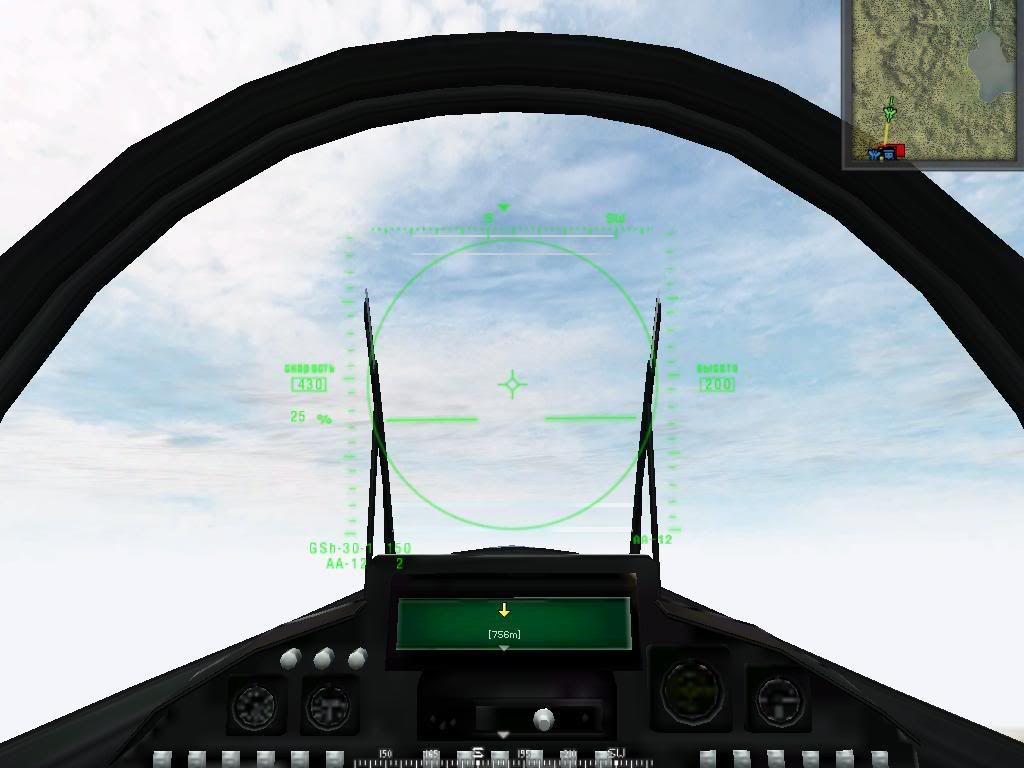
1. J-10 Stall Speed 430kmh 200Alt
<Note: Notice how the J-10 has a surprising low Stall Speed of 400kmh.>
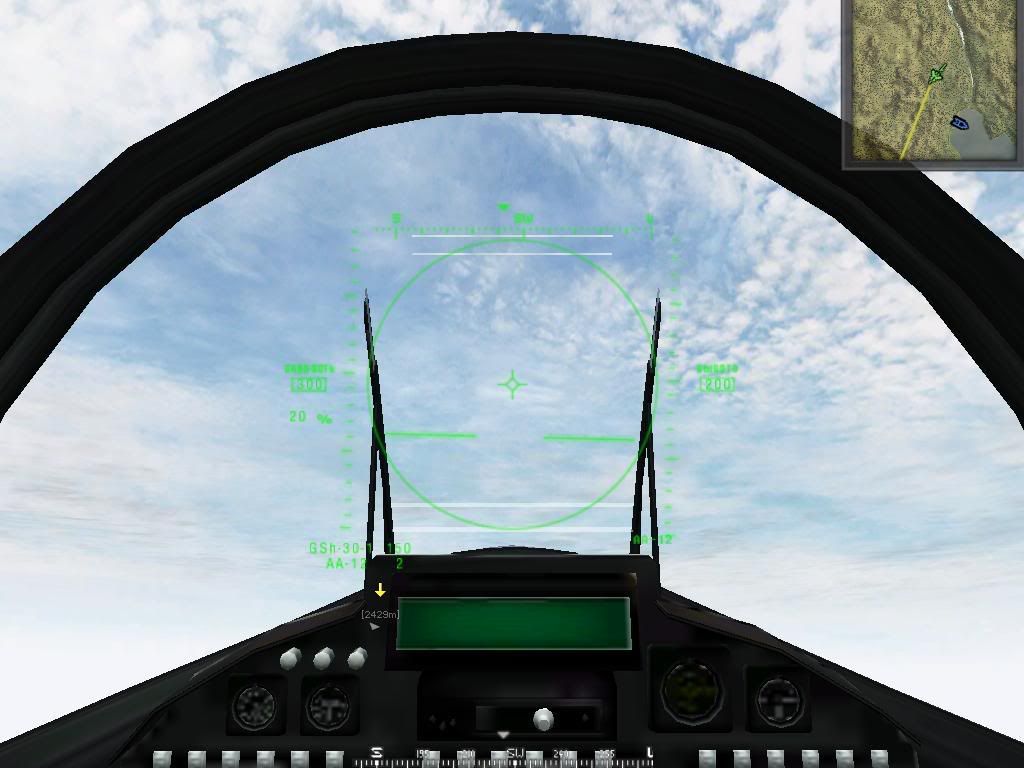
2. J-10 Stall Speed 300kmh 200Alt
<Note: Let's push the Jet Aircraft to it's limits, a speed of 300kmh?! It's practically crawling across the air. But the question is, can it hold it at lower altitudes?>

J-10 Landing Approach -
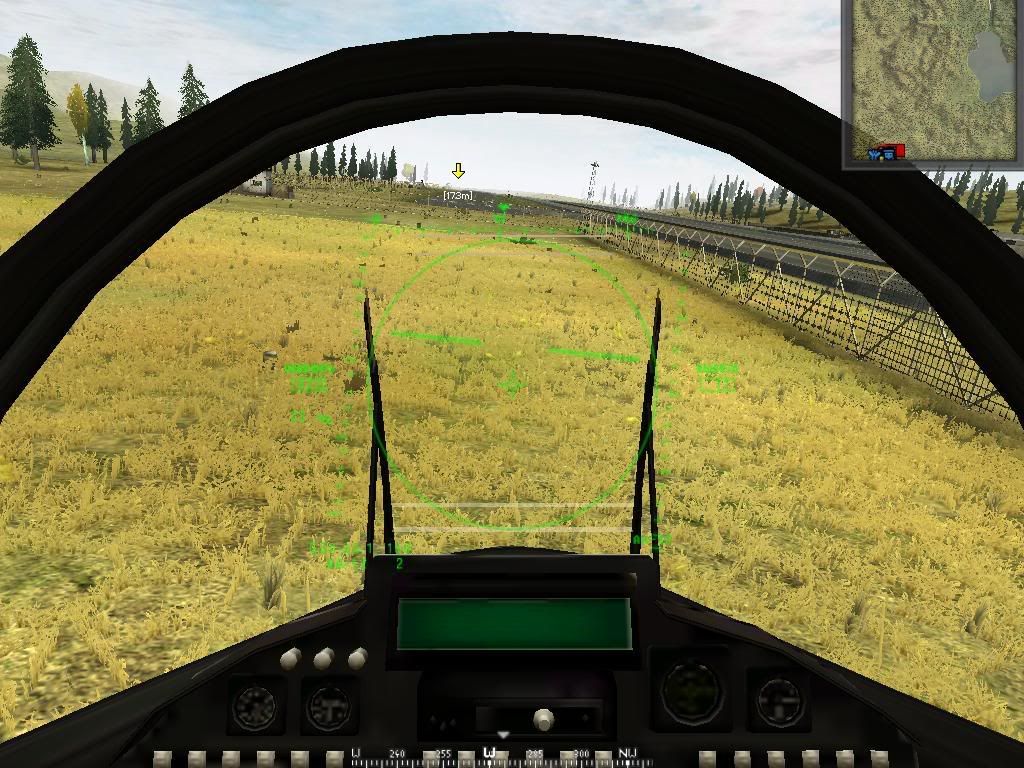
1. J-10 Landing Approach Crash 420kmh
<Note: Notice how the J-10 is at 420kmh, it was previously seen holding at 300kmh. Now it crashes at 120kmh over it's previous low? Something's not right.>

British EF2000:
EF2000 Stall Speeds -
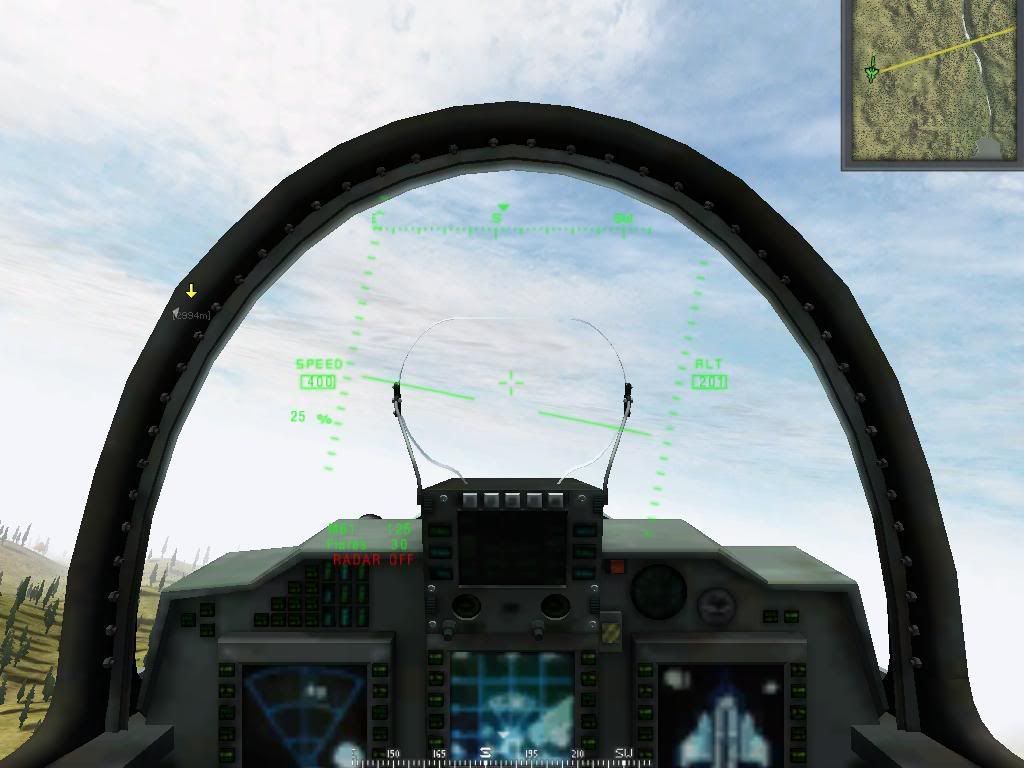
1. EF2000 Stall Speed 400kmh 200Alt
<Note: Notice how the EF2000 is not capable of pulling up as hard as the J-10.>
2. EF2000 Stall Speed 370kmh 200Alt
<Note: Looks like we can push the EF2000 slower. But that's the slowest it'll go. Not too bad at all. And we KNOW it'll hold this speed at lower altitudes unlike the J-10.>

EF2000 Landing Approaches -
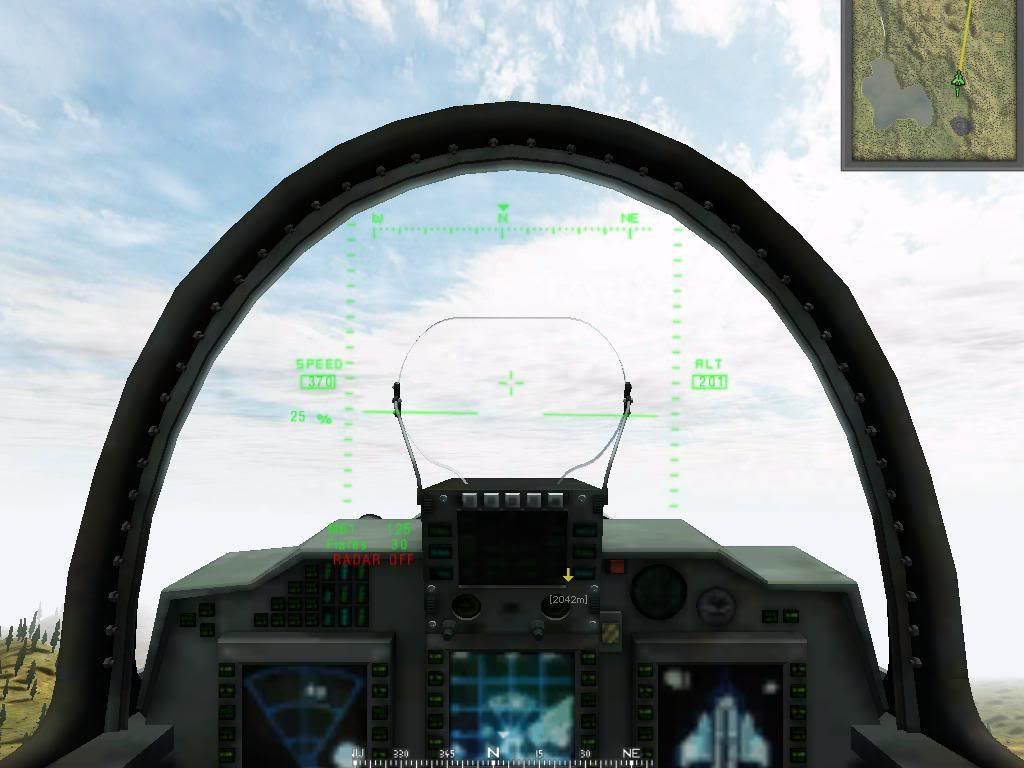
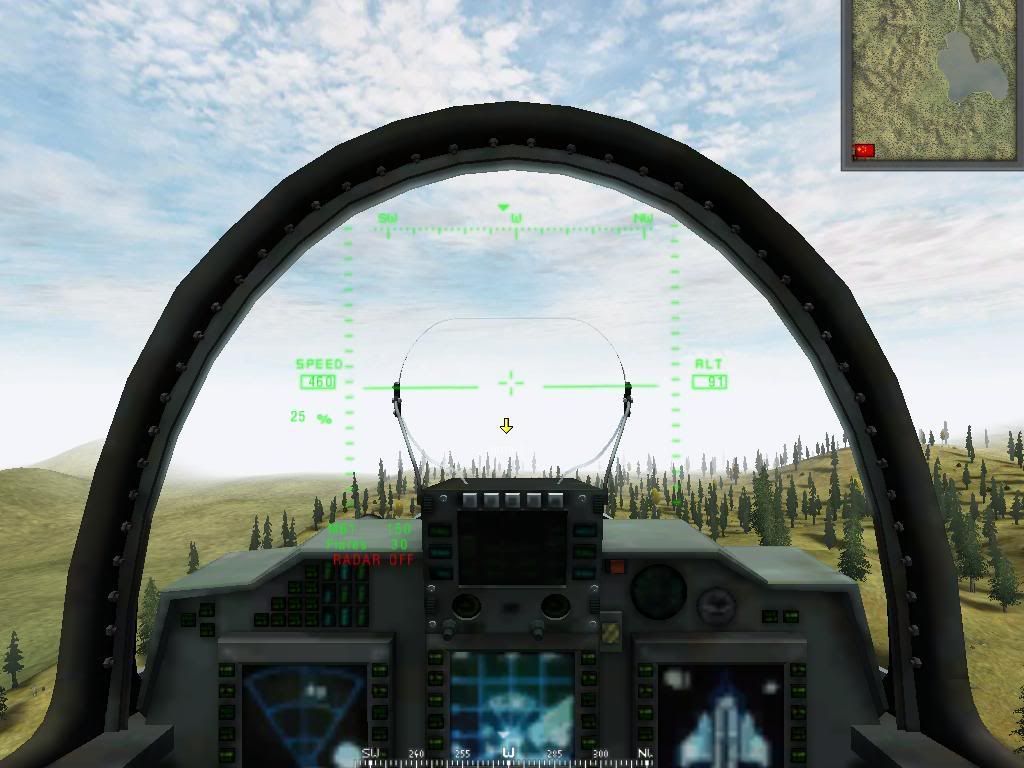
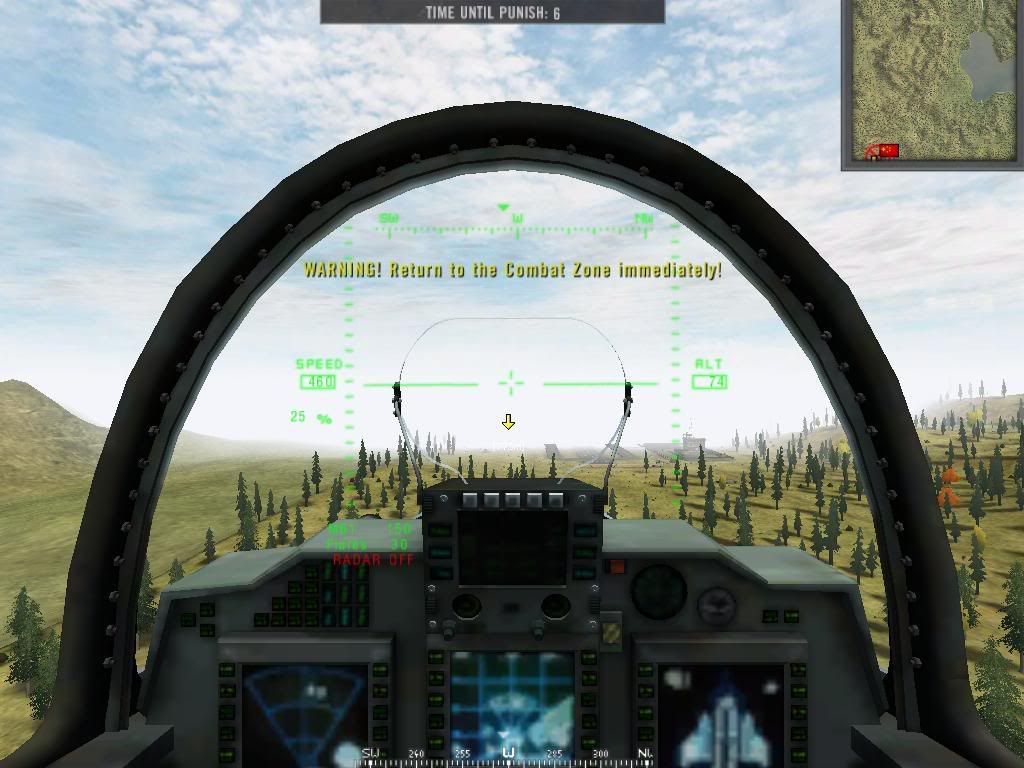
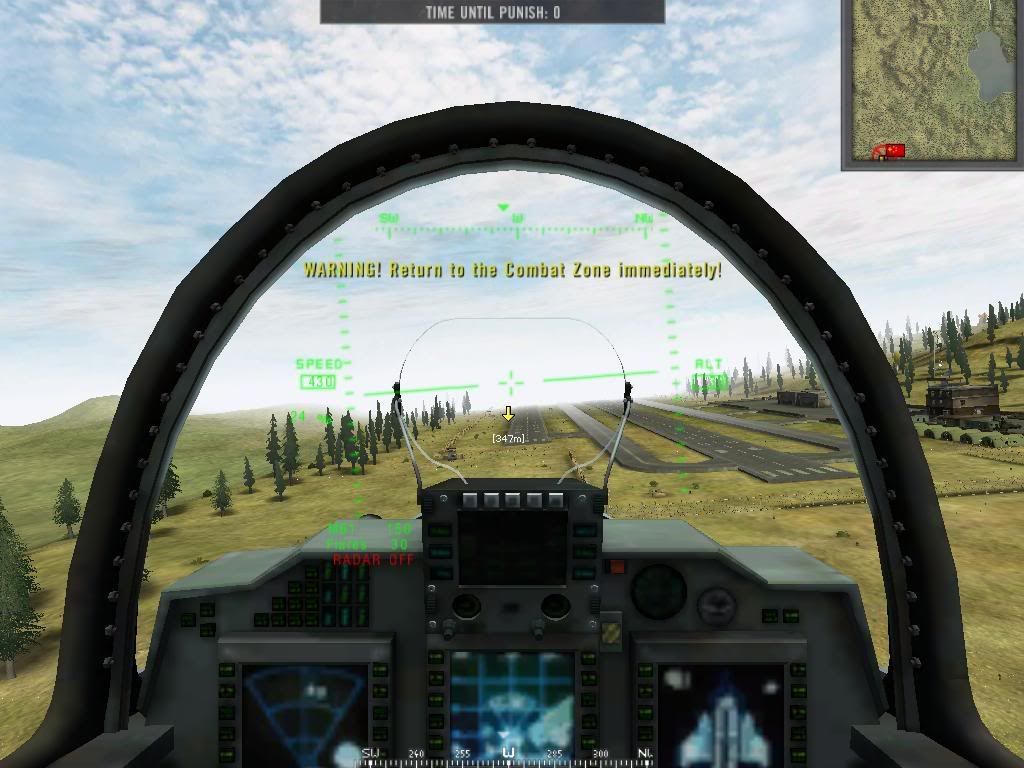
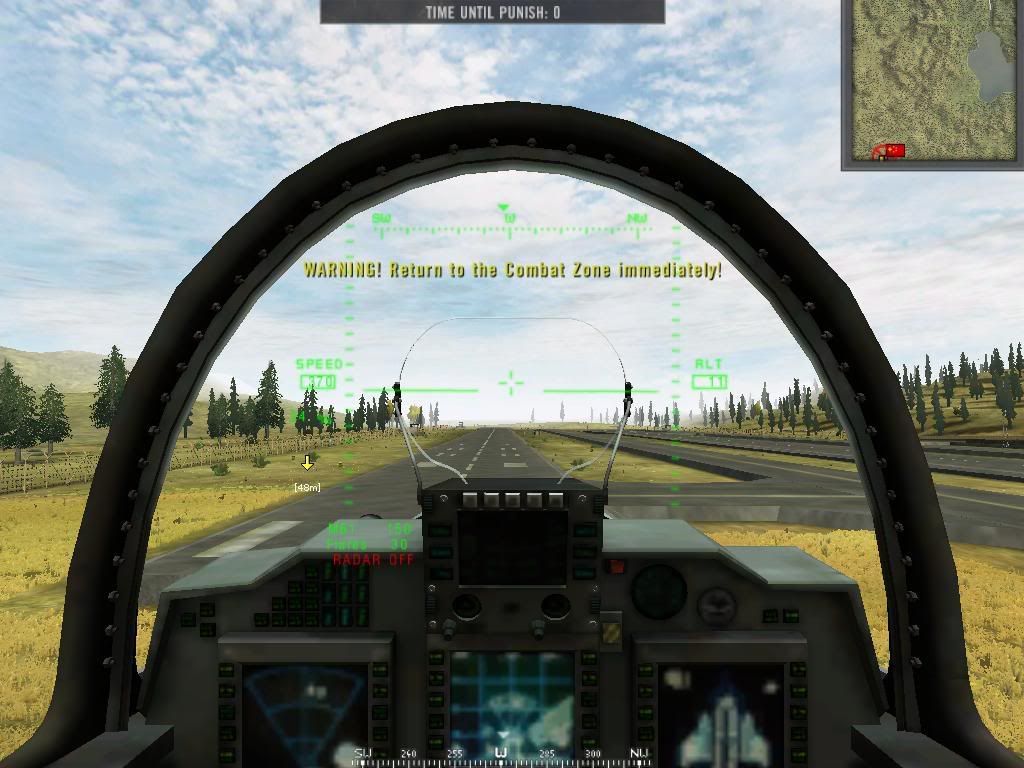
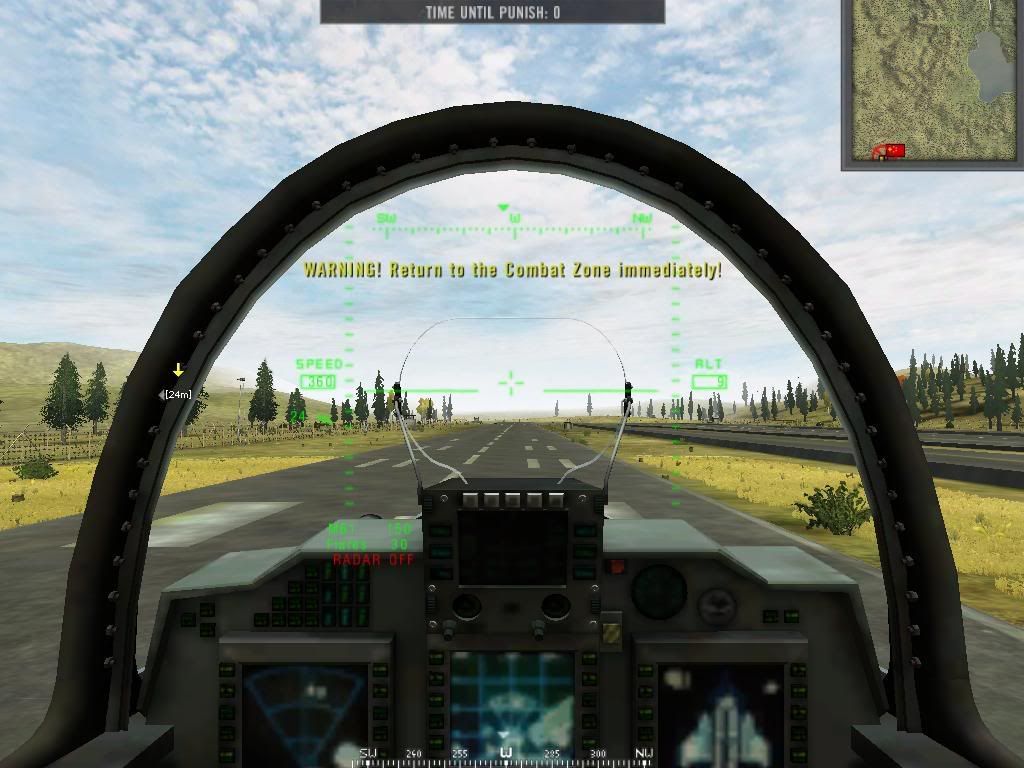
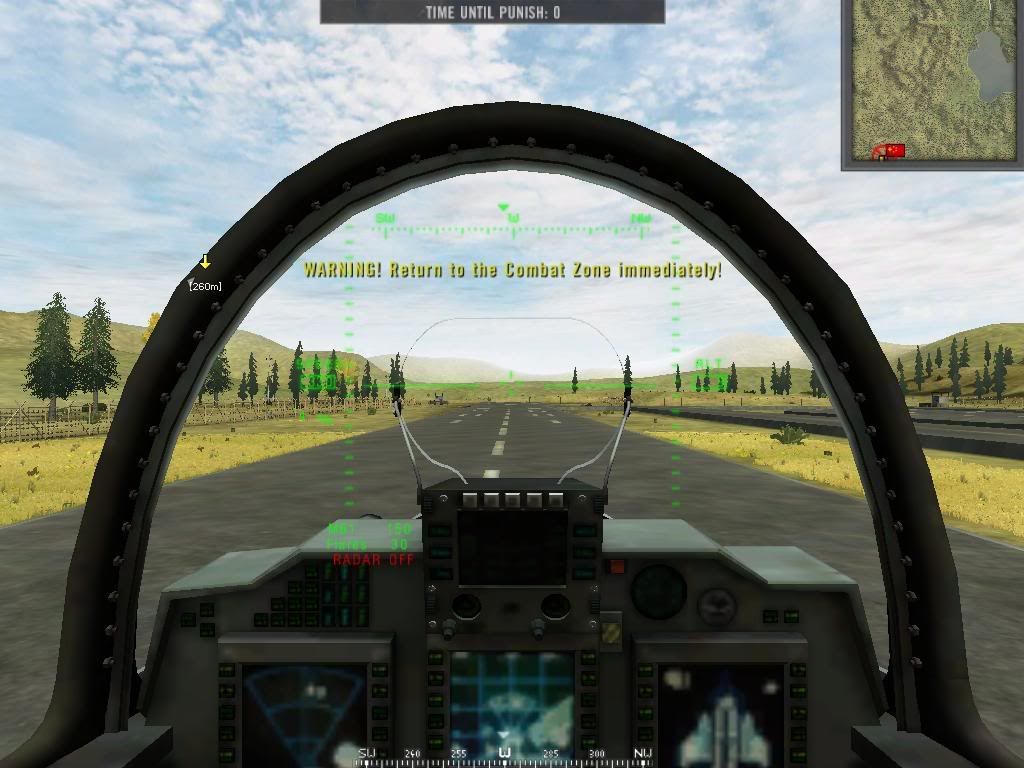
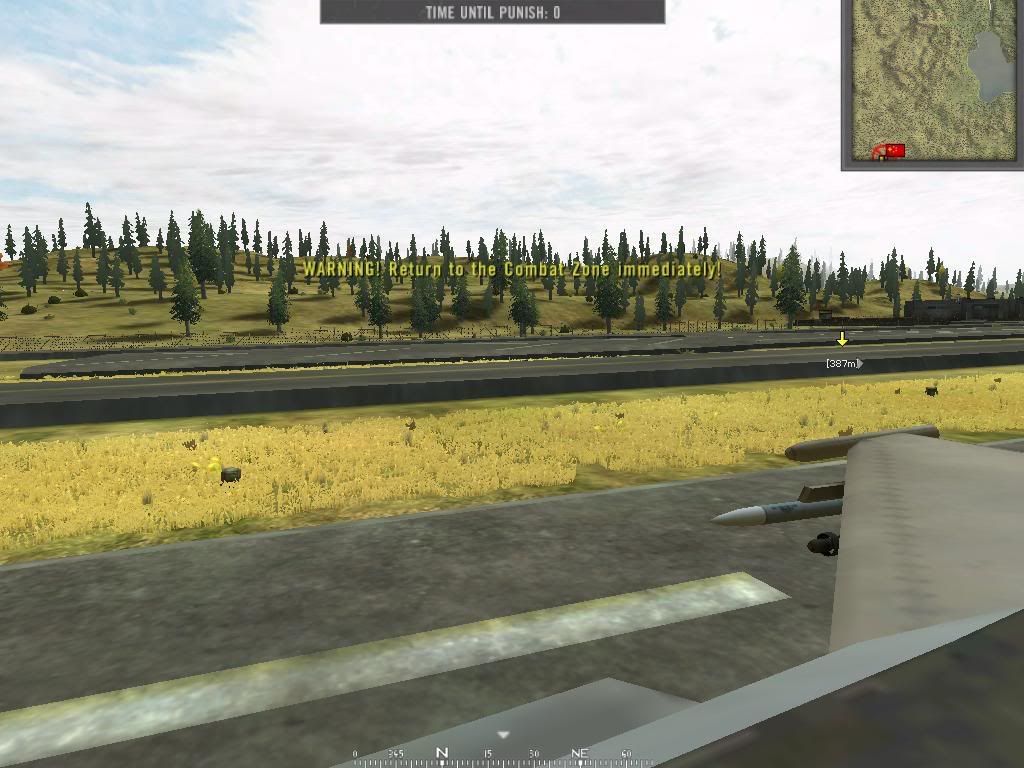
1. EF2000 Landing Approach 1 460kmh 91Alt
2. EF2000 Landing Approach 2 460kmh 74Alt
3. EF2000 Landing Approach 3 430kmh 39Alt
4. EF2000 Landing Approach 4 370kmh 11Alt
5. EF2000 Landing Approach 5 360kmh 9Alt
6. EF2000 Landing Approach 6 330kmh 9Alt
7. EF2000 Landing Approach 7
8. EF2000 Landing Approach 8

________________________________________

First I'd like to say... Yes, my approach was a bit sloppy with the EF2000, but as I was pounding the screenshot button and attempting to fly through the lag in the process, I managed to still land it rather well. The EF2000 had no tendency to slip or stall before the touch down and was very clean. Unlike the J-10 that fell like a ton of bricks out of nowhere just before the runway.

As you can see from the pictures, there's clearly nothing wrong with the behavior of aircraft in relation to the location of the airfield itself. The EF2000 can still land on the Chinese PLA Main runway and the J-10 still has an issue somewhere. With my statements made above in reference to these following ObjectTemplates may be our source of problems.

ObjectTemplate.setAcceleration
ObjectTemplate.setWingLift
ObjectTemplate.setFlapLift
ObjectTemplate.setTorque
ObjectTemplate.setDifferential

I don't feel there is a problem with the deceleration of the J-10, so it feels as if the ObjectTemplate.setAcceleration may not be exactly the problem.

As CAS has stated the ObjectTemplate.setWingLift and ObjectTemplate.setFlapLift factors seem to possibly have an influence, but however may play a minor role.

However the ObjectTemplate.setTorque and ObjectTemplate.setDifferential settings may be the source of our problem instead. The reason why I say this is that in my testings I had also noticed that the J-10 on takeoff does not feel as it has enough torque/grab/push/pull or whatever you want to call it.

Basically when a person takes off in a J-10 and they pull back on the stick it'll lift as intended. However, what I have noticed is that if you try to level out the J-10 too soon after it has taken off the ground and is in flight, it has this strong urge to dip down and slip out from beneath itself. Like I said, it feels like it doesn't have enough torque/grab/push/pull and feels as if it is desperately trying to claw itself up into the air with whatever power it has.

It's not surprising why it may stall upon approach. Because when you're taking off you have the available engine thrust to pull out of that transitional "Dead Zone" where it wants to fall. However, when you're landing and you are at low engine speeds it must make the move through that transitional "Dead Zone" and coincidentally stalls and drops out of the sky.
Last edited by M.Warren on 2009-02-19 21:49, edited 4 times in total.
Take the Blue Pill or take the Red Pill?

Image
pclipse_teh_owner
Posts: 440
Joined: 2008-01-20 15:07

Re: PR Aerospace Improvement: Airports and Runways for Jet Aircraft

Post by pclipse_teh_owner »

I find it extremely stupid that runways and taxiways are elevated!!! That would not be approved by the FAA! You kidding me? You fall off, BOOM!
Image
Mora
Posts: 2933
Joined: 2007-08-21 12:37

Re: PR Aerospace Improvement: Airports and Runways for Jet Aircraft

Post by Mora »

Runways should be wider thats all.
Alex6714
Posts: 3900
Joined: 2007-06-15 22:47

Re: PR Aerospace Improvement: Airports and Runways for Jet Aircraft

Post by Alex6714 »

Runway is elevated due to terrain issues, it would be nice to have a new runway static with the middle bits included but meh.

In real life anyway come off the runway and aircraft/terrain depending you probably end up breaking all your landing gear or similar.
"Today's forecast calls for 30mm HE rain with a slight chance of hellfires"


"oh, they're fire and forget all right...they're fired then they forget where the target is"
M.Warren
Posts: 633
Joined: 2007-12-24 13:37

Re: PR Aerospace Improvement: Airports and Runways for Jet Aircraft

Post by M.Warren »

I don't know... I think it's kinda weird that Kashan Desert has a flush runway, but Qinling has an elevated one. Yet, Kashan Desert's runway doesn't have the shading issue but it's claimed that Qinling would have it if it wasn't elevated.

Besides, the ground isn't ever exactly "flush" where the runway is. This is because the runway is placed on top of a geographical groove. For those that have actually repaired a destroyed runway and remained inside the crater you'd notice this detail.

So... I'm figuring if there was any shading near the runways, you wouldn't notice. This is because the actual ground beneath the surface of the runway is about 8 feet deep below it.

Meh. I'll just take their word for it.
Take the Blue Pill or take the Red Pill?

Image
Maxfragg
Posts: 2122
Joined: 2007-01-02 22:10

Re: PR Aerospace Improvement: Airports and Runways for Jet Aircraft

Post by Maxfragg »

trust me, it would look awfull on qinling, if you don't belive it, get Rising Conflicst, and look at their runways, simply awfull
M.Warren
Posts: 633
Joined: 2007-12-24 13:37

Re: PR Aerospace Improvement: Airports and Runways for Jet Aircraft

Post by M.Warren »

Now, I don't mean to cause any disruption to a thread that has otherwise remained quiet for the last 3 days. But I think that a small handful of pilots that even includes myself are at least in order for some sort of reply on the situation that's been presented here.

I had left this thread to remain idle for a few days assuming that there may have been an attempt to try and investigate the final problems Jet Aircraft in PR face by the PR team or any available community member. The primary focus of this topic is mostly directed at the J-10 and the only two Fighter Bomber jets we have available; the GR4 Tornado and the SU-30 Flanker.

My previous post of questions: PR Aerospace Improvement: Airports and Runways for Jet Aircraft #66

To make my last post more concise I'll cut it down shorter. Basically what I am trying to explain is this:

_______________________________________

ObjectTemplate.setAcceleration -
This template may be thought to be causing a number of problems. I feel that the Acceleration and Deceleration of the J-10 aircraft is adequate or could be increased slightly to allow faster speeding or slowing of the aircraft. It appears to be sufficient at this time though.

However... The GR4 Tornado and the SU-30 are in need of tweaking to allow the aircraft to come to a halt within a standardized amount of time within the length of the runway. Although the GR4 fairs better than the SU-30 by far, it still has a tendency to run off the end of the runway on sloppy but not terribly poor landings.

ObjectTemplate.setWingLift and ObjectTemplate.setFlapLift -
Although these factors have been explained to be minor and inaccurate, I believe they should be rechecked for inadequacies for the J-10, GR4 Tornado and the SU-30. Reason why I point these factors out is to potentially cite problems where the aircraft in question may not be having enough lift to remain aloft on landing approaches.

Furthermore to check if the aircraft in question has sufficient maneuverability to pitch the aircraft up at slower speeds where most other aircraft of the same category do not experience such problems.

ObjectTemplate.setTorque and ObjectTemplate.setDifferential -
I feel that these factors are the largest issue for the J-10. This excludes the GR4 Tornado and the SU-30 as they do not have a tendency to drop out of the air at lower altitudes on approach. The J-10 has been specifically noted to have this unique characteristic of stalling at lower altitudes despite being capable of significantly lower speeds than most other aircraft at medium altitudes.

The pictures provided in the above link show the J-10 stalling at 420kmh on approach, whereas it had been capable of holding it's altitude at a miraculously low speed of 300kmh at an altitude of 200 meters. The J-10 doesn't seem to have enough "Torque" or "Oomph" to keep it aloft and notably drags it's tail at higher angles in comparison to other Jet Aircraft which may be the leading cause of landing failures.

_______________________________________

With that said, I feel that a majority of aircraft in PR are not exactly "standardized" or set to adhere to strict guidelines. As sensitive as aircraft are, they are subjected to more critical factors than normal vehicles. Cars, APC's, Tanks and Helicopters are quite simple in nature. You simply "Go" and it'll do the rest. However Jet Aircraft are probably the closest to manual operation of a vehicle that PR will ever face.

Thus, it should be understood that Aircraft are not some sort of regular vehicle, but instead subjected to higher and exacting standards. Especially when airfields are no longer than 600 meters, meaning that they HAVE TO land and take off within that length of runway. It simply is not an option, it is a critical requirement.

Simply put, aircraft are what I call "Instruments of Flight". They're sensitive scientific equipment, you obviously don't abuse them and expect it to remain finely calibrated.

Some good guidelines are:

1. Aircraft must be capable of taking off and landing/stopping within a critical maximum range of 475-525 meters of a 600 meter runway under the circumstances of an average landing. Although if the Jet Aircraft can land or take off in less than that amount, it is deemed suitable providing it's logically realistic as possible.

<Note: This will hopefully encourage a pilot to continue landing aircraft in a professional manner by landing his/her aircraft in an average or excellent manner. Poor and reckless landings may result in the destruction of the aircraft. This will award skilled pilots incentive to continue with their efforts and dissuade players that may be unfit for this type of role.>

2. Aircraft must be capable of taking off and landing with adequate wing lift and flap lift properties to prevent unnecessary stalling of the Jet Aircraft by design flaws.

3. Aircraft must be capable of taking off and landing with adequate engine torque properties to prevent unnecessary stalling of the Jet Aircraft by design flaws.

4. Aircraft must be capable of taking off and landing with adequate engine differential properties to prevent unnecessary stalling of the Jet Aircraft by design flaws.

5. Aircraft must be capable of deploying it's landing gear prior to landing at lower air speeds to prevent unnecessary belly landings or destruction of the Jet Aircraft by design flaws.
Last edited by M.Warren on 2009-02-22 19:33, edited 1 time in total.
Take the Blue Pill or take the Red Pill?

Image
CAS_117
Posts: 1600
Joined: 2007-03-26 18:01

Re: PR Aerospace Improvement: Airports and Runways for Jet Aircraft

Post by CAS_117 »

2. Aircraft must be capable of taking off and landing with adequate wing lift and flap lift properties to prevent unnecessary stalling of the Jet Aircraft by design flaws.
Saying stalling is unnecessary is like saying that driving in a ditch is unnecessary. Its not a design feature its a fact of life. This also increases the planes turn rate, as well as causing it to pitch up when in level flight.
3. Aircraft must be capable of taking off and landing with adequate engine torque properties to prevent unnecessary stalling of the Jet Aircraft by design flaws.
Again, torque doesn't really affect the takeoff speed. Differential is closer, but what both of these do cause is an either higher or lower maximum speed.
4. Aircraft must be capable of taking off and landing with adequate engine differential properties to prevent unnecessary stalling of the Jet Aircraft by design flaws.
See above.
5. Aircraft must be capable of deploying it's landing gear prior to landing at lower air speeds to prevent unnecessary belly landings or destruction of the Jet Aircraft by design flaws.
Um, I have not heard of a plane belly landing except this one time in a harrier when I did kindof. But still if you're going slow enough to stall, then the gear will already be down, in which case all that can affect you is how high you are. And if its too high then you're pretty screwed. Besides, most of the plane now will have their gear down soon enough. Allowing them to fly slower won't affect that.

...900 words to say "I agree with you CAS".

But do you realize that those things you list ARE what would hypothetically cause the aircraft's design flaws?

Most factors in the plane are not independent of each other.

Lift MUST = Weight or the thing starts doing loops and climbing causing you to stall, or doing likely turns, going inverted and crashing, or going out of bounds. The list goes on. Balancing winglift as well as the pitch offset is very tedious.

What you don't get is for EVERY PLANE I spend HOURS and HOURS making sure that it can fly straight. There is no shortcut other than repeatedly loading up the game over and over and adjusting lift factors by tenths and hundredths. This is made even more complicated by the air density differing on each map by kilometers in some cases. Yes for a few of them I had to do a rush job but honestly I hadn't had any problems landing with them, so I didn't really care at the time.
M.Warren
Posts: 633
Joined: 2007-12-24 13:37

Re: PR Aerospace Improvement: Airports and Runways for Jet Aircraft

Post by M.Warren »

I had already anticipated that the wording of "design flaws" would specifically attract criticism and be misinterpreted. Due to the critical nature of these topics, I'd expect such details to be dissected.

Yes, there should be stalling in game it's clearly obvious why. Just as a modern jet is capable of doing so in reality, it only makes sense that such an event in game would be logical. Stalling is part of the game and there is no intentions on removing it whatsoever.

The perspective that I am trying to point out is that the J-10 has a tendency to stall from generally unprovoked conditions that are outside the norm and unique problems to this aircraft in particular. One moment you'll be on approach to a controlled landing at a set throttle. The next moment you descend gently with your aircraft from a mere 100 meters and a moment later without reducing your throttle in any way, it simply drops to the ground out of nowhere. No other aircraft I know has such a consistent overtone to fall from the sky on a landing approach.

Just as a reference, I had used the AV-8 Harrier avidly on the Training servers. It still handles better than a J-10 on several levels and I happen to take a large amount of pride in being able to manipulate it sufficiently even in it's current incomplete state. Despite the fact that it does not transition from Vertical to Horizontal flight or vice versa sufficiently. Or the fact that the landing gear does not properly drop and has to be coaxed into deploying. This is usually done by flying at low altitudes and reducing your throttle to 47% for the landing preparation sequence to initiate.
CAS_117 wrote:Again, torque doesn't really affect the takeoff speed. Differential is closer, but what both of these do cause is an either higher or lower maximum speed.
Understood. But that's not exactly the point I'm trying to convey. All 9 of 9 Jet Aircraft in PR are capable of taking off. The real issue is that 3 of 9 Jet Aircraft cannot be landed properly by average users. The sooner all aircraft have been deemed capable of taking off, flying and being landed smoothly is when true satisfaction will be reached.

At any rate, this discussion can go on and on without an end in sight. Fact of the matter is it really doesn't matter to me on how it's fixed. For me, the end justifies the means and whatever gets the job done to the fullest extent works. It'd be nice to see some concrete and positive final results.

The least that can be done is to let the small community of pilots here in PR know if they'll ever have something to look forward to. This is in regards to the final repairs and solutions prepared to make our already limited Jet Aircraft experience complete and thoroughly functional for all players to utilize in game.
CAS_117 wrote:...900 words
Well, it may take 900 words to explain myself... But the truth of the matter is, I'm looking forward to hearing a 2 or 3 letter word that will let me know for sure if anything will be done for Jet Aircraft within the upcoming 4-6 months.

I'm sure there's a small number of other pilots lurking about this thread to hear about any good news just as much as I am. Results are the only thing that matters at this point. An elongated debate will not solve the issue by itself.
Take the Blue Pill or take the Red Pill?

Image
gclark03
Posts: 1591
Joined: 2007-11-05 02:01

Re: PR Aerospace Improvement: Airports and Runways for Jet Aircraft

Post by gclark03 »

M.Warren wrote:Well, it may take 900 words to explain myself... But the truth of the matter is, I'm looking forward to hearing a 2 or 3 letter word that will let me know for sure if anything will be done for Jet Aircraft within the upcoming 4-6 months.
A 3-letter word: Yes.

Come on, Warren. Be careful when you phrase these posts.
CAS_117
Posts: 1600
Joined: 2007-03-26 18:01

Re: PR Aerospace Improvement: Airports and Runways for Jet Aircraft

Post by CAS_117 »

The perspective that I am trying to point out is that the J-10 has a tendency to stall from generally unprovoked conditions that are outside the norm and unique problems to this aircraft in particular. One moment you'll be on approach to a controlled landing at a set throttle. The next moment you descend gently with your aircraft from a mere 100 meters and a moment later without reducing your throttle in any way, it simply drops to the ground out of nowhere. No other aircraft I know has such a consistent overtone to fall from the sky on a landing approach.
I haven't experienced this one, but I generally pay more attention to my speed than throttle. Also, how much pitch you are applying may not have been constant. As you pull back on the stick, your lift will increase and cause you to slow down. Also, the J-10 is a screwed up plane on many levels. Just to name a few things out of context that I had to contend with:
  • Backwards wings
  • Backwards flaps
  • Taking off vertically
  • Leaping in the air and doing somersaults on takeoff.
  • EA placing the engine 6m TO THE RIGHT of the aircraft. (Of course no one noticed the J-10 continuously sliding to the left from 0.7 - 0.8 when flying, which you CAN'T overcome by practicing for 15 minutes on local, and has an actual negative effect when flying).

    (Straight From BF2 version 1.41)
    ObjectTemplate.addTemplate AIR_J10_Engine
    ObjectTemplate.setPosition 6.3221e-005/0.000165939/-5.60051
  • A wing that has no lift, no movement, but weighs approximately 5000 kg (J-10 weighs about 11,000 kg)
That's all that I can/all I care to remember. So after going through all of this I can reasonably say, that right now, the J-10 is fine. Seriously.

(Note: In 0.8 guy challenged me to a 1v1 dogfight TWICE, him in the Eurofighter, and me in the J-10. I shot him down 5 times the first time, and 3 times the next. He didn't shoot me once. This was before I increased the J-10s acceleration.) :roll:

See I don't take most pilots in PR seriously because they would know the J-10 has 1 huge advantage in a dogfight, and another huge advantage that was left from vanilla that I can't change. Yes you heard me, the J-10 is the BEST in air to air in PR. Case closed.

HINT: The first one ends in "Attack", and the other one has to do with the enemies missiles.

If you know anything about ACM, or have flown against the J-10 in BF2, you'll know at least one of these.
Last edited by CAS_117 on 2009-02-23 04:20, edited 1 time in total.
Snowno
Posts: 154
Joined: 2007-08-10 14:32

Re: PR Aerospace Improvement: Airports and Runways for Jet Aircraft

Post by Snowno »

Angle of Attack and the fact that most missile bounces off it right before they hit them?

What did I win?
Image
Post Reply

Return to “PR:BF2 Suggestions”